What Are the Best Extinguisher Cabinets in 2026?

Choosing the best Extinguisher Cabinets in 2026 is about more than a clean finish. The cabinet must fit the extinguisher, remain easy to open, and suit the wall, corridor, or outdoor location. A door that sticks or a cabinet that hides its contents can waste precious seconds. Small details matter.

NFPA’s Fire Loss in the United States During 2022 estimated 1,504,500 fires and $18 billion in direct property damage. Those figures cover many types of fires; they do not measure cabinet performance. Still, they underline why accessible, properly selected equipment deserves attention. NFPA 10 describes portable extinguishers as “a first line of defense to cope with fires of limited size.” The standard offers a useful selection context, not a promise that any cabinet will prevent damage.

This guide compares cabinet materials, visibility, weather resistance, mounting options, and compatibility with common extinguisher sizes. It also considers whether instructions remain readable and whether the door can be opened without fumbling. A polished cabinet can still be a poor choice. Product specifications and installation conditions should be checked carefully, because a good-looking enclosure may not fit the extinguisher or its location. The best option is the one that protects the equipment while keeping it clearly visible and readily accessible.
What Are the Best Extinguisher Cabinets in 2026?

What Is a Fire Extinguisher Cabinet and What Does It Do?

A fire extinguisher cabinet is a marked enclosure that keeps a portable extinguisher visible, organized, and protected from bumps, dust, or weather. It does not put out fires. Its job is simpler: help people find and reach the extinguisher quickly. A clear-front door can make the unit easy to identify, while a recessed cabinet reduces obstruction in a busy hallway. The right choice depends on the location, extinguisher size, and whether the cabinet sits indoors or outside. A cabinet can still become a problem if furniture blocks its door.

The need for ready access is practical, not just cosmetic. NFPA’s 2022 U.S. Fire Experience report estimated about 1.5 million fires and 3,790 civilian fire deaths in the United States. OSHA’s portable-extinguisher standard also emphasizes accessible, readily available equipment. These sources do not prove that cabinets prevent deaths; they underline why visibility and access matter. Check that the door opens freely, the extinguisher fits, and any label remains readable. Outdoor units need weather protection, but overly dark or cluttered enclosures can hide what they hold.

Tips: Match cabinet dimensions to the extinguisher, and keep the viewing panel clear. Inspect the cabinet during routine safety checks. Look for corrosion, cracked glazing, loose hinges, or blocked access. Small details get missed. I would not choose a cabinet by appearance alone; a sleek enclosure is useless when its latch sticks.

What Are the Best Extinguisher Cabinets in 2026?

What Is a Fire Extinguisher Cabinet and What Does It Do?

A fire extinguisher cabinet provides a designated enclosure and access point for an extinguisher. The chart marks common cabinet functions, not product ratings: features such as a viewing window, labels, and environmental protection vary by model. Choose a cabinet that fits the specified extinguisher and installation, and keep the extinguisher accessible and properly maintained.

Which Types of Extinguisher Cabinets Are Available in 2026?

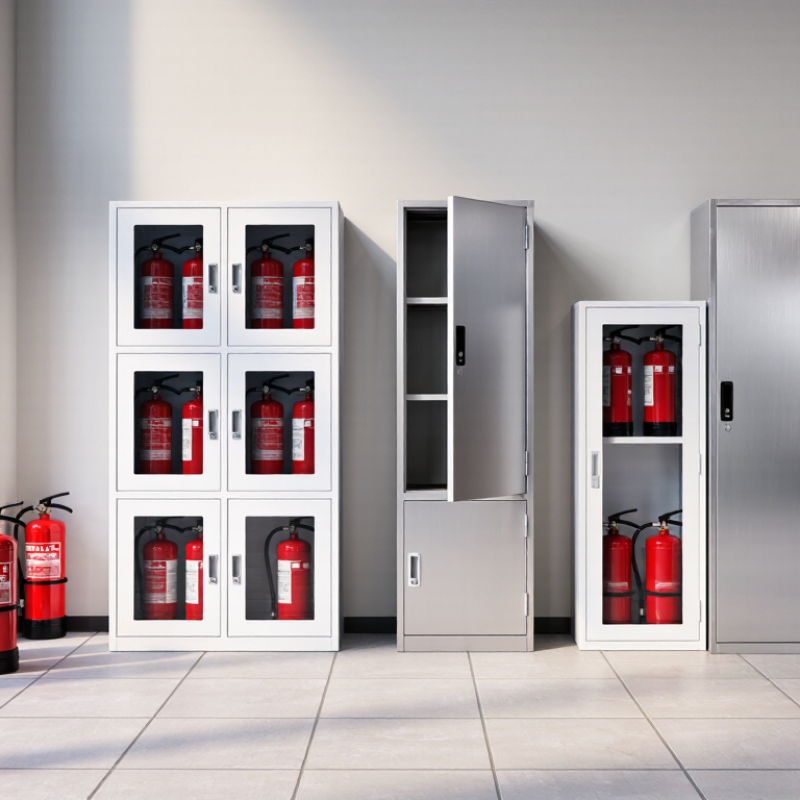
Extinguisher cabinets in 2026 generally fall into several practical types. Surface-mounted cabinets sit fully outside the wall, making them easier to install in existing buildings. Recessed models fit between wall studs, leaving only the door and frame visible. Semi-recessed cabinets offer a middle ground when walls cannot accommodate a full recess. Measure the extinguisher, hose, and door swing before choosing; a cabinet that looks tidy but blocks quick access is a poor fit.

Location and exposure matter, too. Indoor cabinets may use painted steel, stainless steel, or impact-resistant glazing, while outdoor units need weather-resistant construction and secure latches. Some cabinets have clear doors for quick visual checks; others use solid doors where appearance or protection is a priority. Combination cabinets can hold extinguishers alongside hose equipment, but require more wall space. Small detail, big difference.

The NFPA report Fire Loss in the United States During 2023 estimated about 1.39 million fires nationwide. That figure is not evidence that one cabinet style prevents fires, but it underscores the value of visible, reachable equipment. Match the enclosure to the building, exposure, and extinguisher dimensions, then inspect it regularly. Even the right cabinet can become an obstacle if stored items crowd its door.

What Features Matter When Choosing an Extinguisher Cabinet?

Choosing an extinguisher cabinet starts with the extinguisher and the space around it. Measure the unit, including its handle and hose, then leave enough room for quick removal. A snug fit can look tidy but may slow access during an emergency. Small details matter.

For corridors or public areas, a clear panel lets people identify the extinguisher without opening the door. Check that the door opens freely and that its handle is easy to operate. In damp or dusty locations, corrosion-resistant materials and a well-fitted door can help protect equipment. A cabinet should also be mounted securely at a practical height, without blocking walkways or signs.

Visibility is useful, but it is not the only concern. Consider whether the cabinet’s size suits the extinguisher type and whether its finish fits the surroundings. Sharp edges, a stiff latch, or a door that swings into passing traffic can create avoidable problems. These details are easy to miss when choosing from a product photo. Check installation guidance and applicable local fire-safety requirements, since placement and access needs vary by building. A cabinet that looks durable may still be awkward in daily use, so inspect the actual opening and removal process before settling on one.

What Are the Best Extinguisher Cabinets in 2026? — What Features Matter When Choosing an Extinguisher Cabinet?
Selection Feature What to Look For Best Fit Why It Matters Check Before Buying
Cabinet style Recessed, semi-recessed, or surface-mounted construction. Recessed: new construction or suitable wall cavities. Surface-mounted: retrofit installations or walls that cannot be opened. Semi-recessed: a compromise where wall depth is limited. The mounting style affects wall work, finished projection, and how easily the cabinet can be placed near the extinguisher’s intended location. Confirm wall depth, stud or masonry conditions, installation method, and whether the cabinet will obstruct a door, corridor, or equipment.
Interior dimensions A clear opening and interior large enough for the specific extinguisher, including its handle, hose, and other projecting parts. Any installation where the extinguisher must be removed quickly and returned without snagging. A cabinet that is too small can make access awkward or prevent the door from closing properly. Compare the manufacturer’s usable interior dimensions with the extinguisher’s overall dimensions; allow practical room for grasping and removal.
Access and door operation A door that opens fully and a latch that can be operated promptly without a key during routine emergency access. Public areas, workplaces, and other locations where different occupants may need to reach the extinguisher. An extinguisher must remain readily accessible and available for use; a complicated release can create avoidable delay. Test the door swing and latch in the actual location. Check that nearby furnishings or traffic will not block access.
Visibility A clear front panel or another conspicuous way to identify the cabinet and its contents. Corridors, large rooms, shared spaces, and locations where the extinguisher is not immediately obvious. Clear identification helps occupants find the equipment without opening several cabinets or searching the area. Check visibility from normal approach directions and confirm that signs or markings remain unobstructed after installation.
Material and finish Materials and coatings suited to expected exposure, such as painted metal for many indoor settings or corrosion-resistant construction where moisture is a concern. Painted metal: typical protected interiors. Corrosion-resistant materials: damp, wash-down, coastal, or otherwise corrosive environments, when suitable for the application. Environmental exposure can affect appearance, door operation, and long-term condition. Review the stated material, finish, and intended environment. Do not assume a standard indoor cabinet is suitable for outdoor exposure.
Weather protection For outdoor placement, a cabinet specifically designed for the site’s rain, dust, sunlight, and temperature conditions. Exterior walls, exposed service areas, and other outdoor locations. Outdoor exposure can damage the cabinet or extinguisher if the enclosure is not designed for those conditions. Check the manufacturer’s environmental-use information and inspection guidance. A door or gasket alone does not establish suitability for every outdoor condition.
Mounting and security Mounting provisions appropriate to the wall and a retention method that keeps the extinguisher in place without obstructing emergency removal. Locations subject to vibration, accidental knocks, or tampering concerns. Secure installation helps keep the cabinet stable while preserving quick access to the extinguisher. Verify wall-anchor compatibility, cabinet weight, and the release method. Avoid arrangements that require a key or special tool for ordinary emergency access.
Inspection and maintenance access A design that lets users view and remove the extinguisher for inspection, servicing, and replacement. All installations, especially facilities with scheduled fire-equipment inspections. Cabinet placement should not make it difficult to check the extinguisher’s condition or carry out required maintenance. Confirm the door can be opened repeatedly and that the extinguisher can be removed without dismantling the cabinet or nearby fixtures.
Code and site compatibility Dimensions, placement, visibility, and installation details that meet applicable local requirements and the building’s fire-safety plan. Commercial, industrial, institutional, and residential common areas. Extinguisher placement and cabinet installation can be subject to local fire and building requirements; a cabinet alone does not establish compliance. Confirm requirements with the authority having jurisdiction or a qualified fire-safety professional. Select the extinguisher for the expected fire hazards, not by cabinet type.

How Do Leading Cabinet Options Compare for Different Settings?

The best extinguisher cabinet depends on where it will be installed and how quickly staff need to reach it. In a busy corridor, a surface-mounted steel cabinet is often practical: it is visible, simple to inspect, and easier to install without opening a wall. Check that its depth fits the extinguisher without forcing the door shut. Fit matters.

Recessed cabinets suit offices, hotels, and other spaces where clear walkways and a neat appearance matter. They sit closer to the wall, but installation requires a suitable cavity and careful planning around pipes or wiring. A transparent viewing panel can help people identify the extinguisher quickly. It should not make access awkward.

Outdoor and industrial settings need different priorities. Look for cabinets designed to resist the site’s moisture, dust, and temperature changes; a standard indoor cabinet may corrode or let water in. In workshops, a durable finish and secure mounting can matter more than appearance. In exposed areas, inspect seals and hinges regularly, since even a weather-resistant cabinet can deteriorate. Not always obvious. A cabinet that looks sturdy may still be poorly suited to its location. Before choosing, check extinguisher dimensions, door clearance, visibility, and the route people will take to reach it.

How Should Extinguisher Cabinets Be Installed and Maintained?

A well-installed extinguisher cabinet keeps equipment visible, protected, and easy to reach. Choose a location along a clear path, near the relevant fire risk but away from doors, carts, and stored supplies. A neat cabinet can still be poorly placed. Check that its size suits the extinguisher and allows quick removal without snagging the hose or handle.

Mount the cabinet to a sound surface using suitable fasteners. Follow the cabinet instructions and local fire-safety requirements, since mounting heights and placement rules can vary. On rough concrete or thin wallboard, the wrong anchor may loosen over time. Take a moment to check the wall behind the mounting points. Keep labels facing outward, and avoid covering the cabinet with decorations or signs.

Maintenance should be simple, but consistent. During routine site checks, confirm the door opens freely, the latch works, and the cabinet is dry and free of damage. Make sure the extinguisher remains present, accessible, and within its service date. Follow your facility’s inspection schedule and arrange qualified servicing when needed. Outdoor cabinets may need closer attention after heavy rain or temperature changes. Small details matter. A cracked window or stiff hinge can delay access, and those problems are easy to overlook.