5 Tips for Choosing the Best Steering Wheel Lock Bar?
A Steering Wheel Lock Bar is a visible layer of protection, not a promise that a vehicle cannot be stolen. The right choice should fit your steering wheel securely, install without a struggle, and be easy to notice through the windshield. Bruce Schneier, a widely cited security expert, offers a useful principle: “Security is a process, not a product.” His statement concerns security broadly, not steering-wheel locks specifically, but it reminds buyers to think beyond one device.
This guide introduces five practical checks: fit, construction, locking mechanism, ease of use, and visibility. Look closely at how the bar rests against the wheel. Does it wobble? Can the ends reach a position that makes removal harder? Check the lock and joints for solid construction, then test the key or release mechanism before relying on it. Small details matter. A stiff lock on a rainy morning can become a reason to leave the bar unused.
Price and bright colors deserve a second look. A higher price does not automatically mean better protection, and a vivid bar cannot replace careful parking habits. Even a well-fitted device has limits. That is worth admitting. The best option is one you can fit consistently, store safely, and use alongside sensible vehicle-security habits. Use these tips to compare real features, not bold claims.
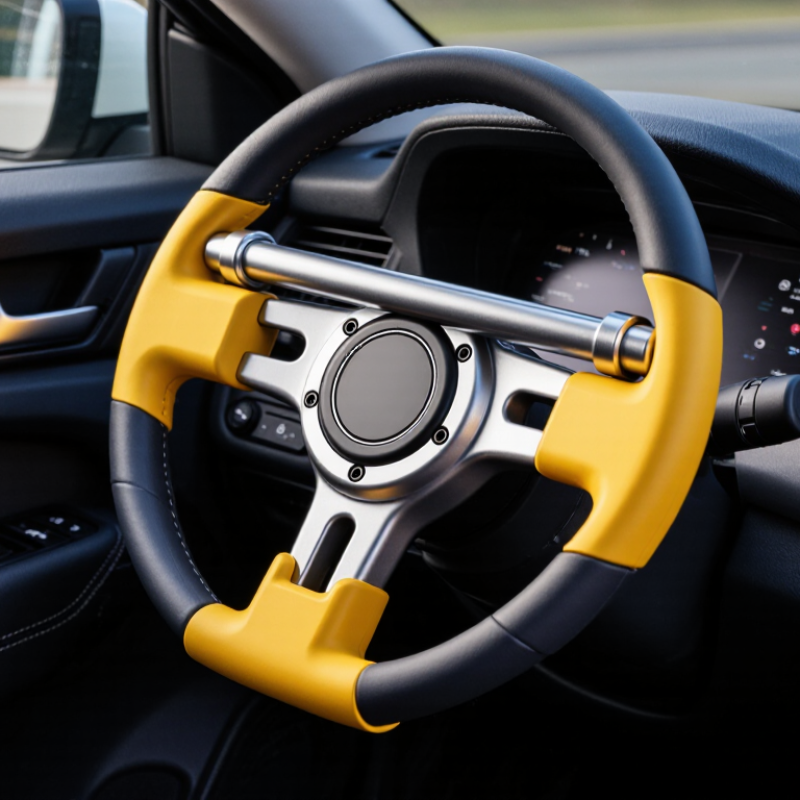
Understand How Steering Wheel Lock Bars Help Deter Theft
5 Tips for Choosing the Best Steering Wheel Lock Bar?
Understand How Steering Wheel Lock Bars Help Deter Theft
A steering wheel lock bar creates a visible obstacle and makes steering more difficult. A thief may prefer a vehicle that appears quicker to take. The bar is not a guarantee. It can, however, add time and attention to an attempted theft.
The National Insurance Crime Bureau reported 1,020,729 U.S. vehicle thefts in 2023, followed by 850,708 in 2024—a 17% decrease. Those figures describe reported thefts, not the effect of any single security device. Treat a lock bar as one layer, alongside locking doors and parking in a well-lit area.
Fit matters. Check that the bar adjusts securely across your steering wheel and resists slipping when gently tested. A bright, easy-to-spot design can make the barrier obvious through the window. Look for sturdy construction and a lock mechanism that works smoothly; an awkward device may end up unused. Test it before relying on it, and store it where you can reach it.
A small reality check: visible deterrents can discourage, but they cannot stop every determined thief.
Check Compatibility With Your Vehicle and Steering Wheel
A steering-wheel lock bar must match both the wheel and the vehicle’s layout. Measure the wheel’s outside diameter and rim thickness, then compare them with the lock’s stated range. Check where the spokes sit, too; wide or unusually shaped spokes can prevent the hooks from seating securely. Fit matters.
Look at the owner’s manual and inspect the wheel before buying. The bar should not press on the airbag cover or obstruct buttons, paddle shifters, or the driver’s view. If your steering wheel adjusts for reach or tilt, test the lock with the wheel in your usual position. A bar that looks snug in a product photo may shift on a real wheel. That detail is easy to miss.
The National Insurance Crime Bureau’s 2023 Annual Vehicle Theft Report recorded 1,020,729 vehicle thefts in the United States, about 1% more than in 2022. That figure is a reminder to treat a steering lock as one layer of protection, not a guarantee. Before relying on one, fit it while parked: check that both ends engage fully, the bar cannot slide off with light hand pressure, and the key turns without forcing it. If the fit feels uncertain, recheck the measurements or choose a model specified for your vehicle type. I would not guess.
5 Tips for Choosing the Best Steering Wheel Lock Bar: Check Compatibility With Your Vehicle and Steering Wheel
Use these five checks before choosing a lock bar: confirm the steering wheel’s diameter and rim thickness, check clearance around the spokes and dashboard, and make sure the bar’s adjustment range suits your vehicle. The bars show how many checks are listed for each fitment area; they are not product test results.
Compare Locking Mechanisms and Construction Materials
When comparing steering wheel lock bars, look closely at how each one secures and releases. A key-operated cylinder is simple to use, but its cover and fit matter because dirt can make a tight mechanism awkward. A combination lock avoids carrying a key, though small number wheels may feel fiddly in cold weather. Try the mechanism several times before buying. Small detail: check the release. A bar that locks firmly but opens smoothly is easier to use consistently.
Construction affects how the bar handles force and everyday wear. Hardened steel resists bending better than thin, lightweight tubing, while reinforced joints can reduce weak points near the hooks. Check whether the locking parts are metal, and inspect welds for gaps or rough edges. A protective coating helps limit scratches and corrosion, but it cannot make weak steel strong. The finish can be misleading. It is easy to overvalue a heavy feel; weight alone does not prove quality. Look for clear material details, a secure fit on your steering wheel, and parts that do not rattle when gently moved.
Assess Ease of Installation, Visibility, and Storage
When choosing a steering wheel lock bar, test the fitting process in your own parked car. It should attach without awkward twisting, and its adjustment should feel secure rather than forced. Try it with the seat in your usual position. A tool that takes several minutes to fit may be left unused on a rushed evening. That matters.
Visibility is useful, but it is not a guarantee. Position the bar so it can be seen through a side window without blocking your view while driving or interfering with an airbag. The National Insurance Crime Bureau reported 1,008,756 vehicle thefts in 2022, about 7% more than in 2021. That figure describes the wider theft problem; it does not prove that a visible lock prevents a particular theft. Treat visibility as one practical consideration, not a promise.
Storage deserves a real-world check. Measure the bar against the space beneath your seat or inside your trunk, and consider whether it rattles over rough pavement. A padded contact point can help protect nearby trim, though some padding may wear down. Small detail. If the lock is bulky, heavy, or inconvenient to reach, you may skip using it. I would, too, on a bad day.
Choose a Lock That Fits Your Budget and Security Needs
Set a firm spending limit, then compare what each steering wheel lock actually offers. A low-cost bar can provide a visible deterrent, but thin materials or a loose fit may make it less reassuring. Check the product’s stated materials, locking mechanism, and warranty rather than judging by price alone. Measure your steering wheel and confirm the bar adjusts to it before buying. Fit matters. A bar that slips, blocks your view, or is awkward to store may end up unused.
Your security needs depend on where and how long you park. A car left overnight on a quiet street may call for a sturdier, more noticeable lock than one parked briefly in a monitored garage. Still, no steering wheel lock can guarantee that a vehicle won’t be stolen. If your budget is tight, choose a well-fitting model with solid construction instead of paying extra for features you won’t use. I’d also consider whether you can install and remove it easily in the dark or in cold weather. Small inconvenience, perhaps—but it can affect whether you use it consistently. Keep the lock from interfering with driving controls, and remove it before starting the car.