How to Choose U 40 Insulin Needles in 2026
Choosing U 40 Insulin Needles in 2026 starts with one essential check: the insulin concentration. U-40 insulin contains 40 units per milliliter, so its delivery device must be clearly marked for U-40. A mismatch can cause a dosing error. Check the label, not just the needle’s appearance.
The International Diabetes Federation’s IDF Diabetes Atlas, 10th edition, estimated that 537 million adults were living with diabetes in 2021. That figure describes human diabetes worldwide, not demand for U-40 products; many U-40 formulations are used in veterinary care. For device specifications, ISO 8537:2016 sets requirements for sterile, single-use insulin syringes. These sources offer useful context, but neither replaces the instructions for a specific insulin product. Details matter.
Veterinary internist Dr. Erin Behrend and coauthors address safe insulin use in the AAHA Diabetes Management Guidelines. The guidelines state: “Insulin therapy is the mainstay of treatment for diabetic dogs and cats.” In practice, choosing U 40 Insulin Needles means checking the prescribed syringe concentration, needle length and gauge, packaging, and compatibility with the intended injection site. A fine needle may feel less intimidating, but “finer” is not automatically the right choice. Ask the prescribing clinician to confirm the exact device and demonstrate its use. Then compare the package markings with the insulin label under good light. This guide will examine those choices for 2026, including common selection mistakes. One limitation deserves attention: product designs and local availability change, so readers should verify current manufacturer instructions before buying.
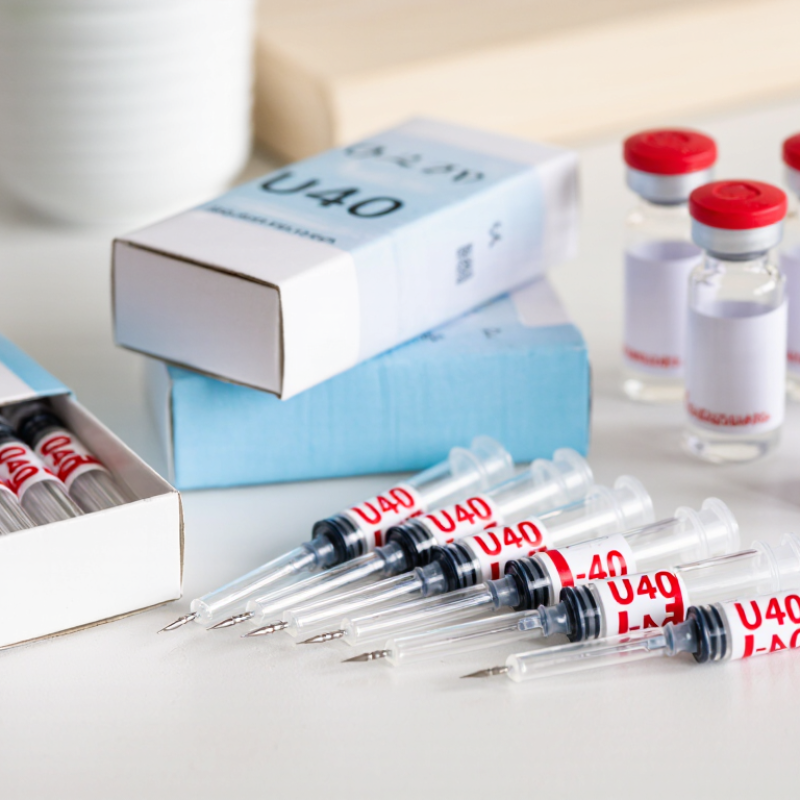
Understand What U-40 Means and How It Differs from Needle Size
U-40 describes insulin concentration: 40 units of insulin per milliliter. It does not describe the needle’s thickness or length. Those physical features are usually listed as gauge and millimeters. Gauge indicates thickness; a higher gauge number generally means a thinner needle. Length affects how far the needle reaches into tissue. They are not interchangeable terms.
People sometimes say “U-40 needles” when they mean U-40 insulin syringes. The distinction matters: the syringe must match the insulin concentration, while needle size is a separate choice. A U-40 syringe has markings calibrated for U-40 insulin. Using a syringe calibrated for another concentration can lead to a serious dosing error. Check the label and markings, not just the needle in the package. Easy to overlook. For needle length and gauge, follow the prescriber’s guidance and the device instructions; comfort, injection site, and technique can affect the choice. If a label is unclear or the prescribed insulin and syringe markings do not match, pause and ask a pharmacist or clinician before injecting. Don’t estimate or convert the dose yourself.
How to Choose U-40 Insulin Needles in 2026
Understand what U-40 means—and how insulin concentration differs from needle size.
U-40 means 40 units of insulin per milliliter; U-100 means 100 units per milliliter. These values describe concentration, not needle length or gauge. Match the insulin concentration to a syringe calibrated for that concentration, and ask a healthcare professional if you are unsure.
Check Insulin Concentration and Syringe Compatibility
How to Choose U 40 Insulin Needles in 2026
U-40 describes insulin containing 40 units per milliliter. It does not describe the needle itself. The key check is whether the syringe scale matches the insulin concentration. Read the vial label carefully, then confirm the syringe is marked U-40. A U-100 syringe has a different scale and can deliver the wrong dose with U-40 insulin. Small markings matter.
Check that the syringe and needle are physically compatible, too. Some syringes have a fixed needle; others use a detachable one. If the needle is detachable, confirm that its connector fits the syringe without force. Needle length and thickness are separate considerations from concentration, so ask a pharmacist or clinician what suits your prescription. I know these details can seem repetitive, but a quick second check is worthwhile. If the label or markings do not match, pause and ask a healthcare professional before use.
Tips: Keep the vial and syringe packaging nearby while checking. Read the concentration aloud, then compare it with the syringe scale. Never estimate a dose or convert markings yourself.
Choose Needle Length and Gauge for the Injection Site
U-40 describes insulin concentration, not needle size. Choose a syringe explicitly marked U-40 and matched to your prescribed dose; U-100 markings are not interchangeable. That distinction matters. Needle length should help deliver insulin into the fatty layer beneath the skin, not muscle. The best length depends on the syringe, body build, and your clinician’s instructions. It is easy to focus on the package number and overlook the injection site. Don’t choose by appearance alone.
The abdomen, outer thigh, and back of the upper arm are common subcutaneous sites. Avoid scars, bruises, and irritated skin. Move a few centimeters from the previous spot with each dose. Gauge works differently: a higher gauge number means a thinner needle, while length is measured in millimeters. A thinner needle may feel gentler, but comfort and reliable delivery both matter. Ask a diabetes clinician or pharmacist to check your U-40 syringe, needle length, and technique. If insulin leaks, an injection hurts unusually, or you are unsure about the site, seek individualized advice.
Confirm Product Standards and Seek Clinician Guidance Before Use
How to Choose U-40 Insulin Needles in 2026
U-40 insulin requires a delivery device specifically marked for U-40 use. Check the syringe scale and packaging; a needle alone does not show how insulin is measured. Do not substitute a U-100 syringe or estimate a conversion. The wrong device can lead to a serious dosing error. Labels can look similar, especially in a busy medicine cabinet. Pause and read them carefully.
Before using a product, ask your clinician or pharmacist to confirm it matches your prescribed insulin and instructions. Check that the package is sealed, sterile, undamaged, and within its expiration date. Look for clear manufacturer details and applicable quality or regulatory information for your region. If the label is unclear, the device is unfamiliar, or the insulin has changed, do not guess. Get professional guidance. It may feel like an extra step, but it matters.
Tips: Bring the insulin and device packaging to your appointment. Ask the clinician to show you the correct markings and review your technique. Use each syringe once, then dispose of it in an approved sharps container. If you notice a mismatch, stop and ask before injecting.