How to Choose a Dock Shelter in 2026?
Choosing a Dock Shelter in 2026 starts with the loading bay, not a product photo. Measure the opening width and height, then note the building’s wall surface and available mounting space. Record the usual truck sizes, including less common vehicles that still visit each week. These details shape the fit. Small differences matter.
Consider what the shelter must handle each day. High delivery volumes may call for durable materials and easy access for frequent vehicle movements. Sites facing rain, wind, or cold weather should compare how well each design closes gaps around parked trucks. A dock shelter can support cleaner, more controlled loading conditions, but performance depends on the fit, installation, and maintenance. No design seals every truck perfectly.
Compare fixed-frame and inflatable options against your traffic patterns and operating needs. Ask suppliers for clear product specifications, installation requirements, warranty terms, and maintenance guidance. Check whether replacement parts are available and how the fabric, frame, and fasteners hold up to repeated use. Look closely at the dock approach, too; poor alignment can strain equipment or leave unwanted gaps.
A careful checklist helps. Still, measurements alone can mislead when truck dimensions vary or the building has an uneven façade. Recheck the site before ordering, and involve the people who use the dock every day. Their observations may reveal problems a drawing misses. The right choice is not always the most elaborate one. It is the shelter that fits the site, suits the work, and can be maintained reliably over time.
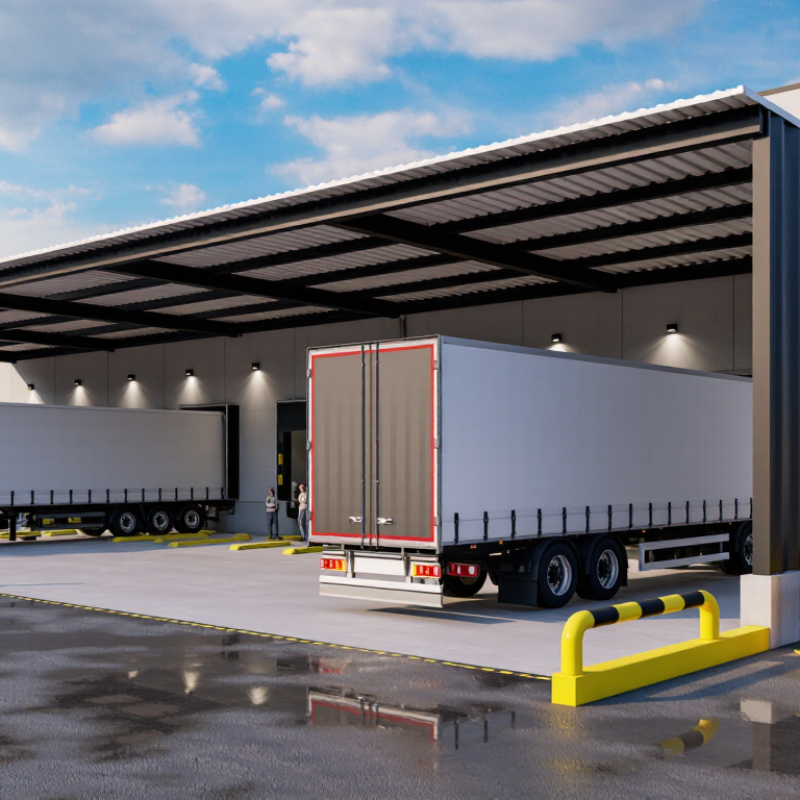
Understand the Role and Operating Conditions of a Dock Shelter
How to Choose a Dock Shelter in 2026?
A dock shelter forms a flexible connection between a building and a backed-in trailer. Its main role is to limit drafts, rain, dust, and temperature loss during loading. It can also make the dock area more comfortable for workers and help protect goods near the opening. It is not a perfect seal. Gaps can remain when trailer sizes or parking positions vary.
Start by observing actual operating conditions, not only the doorway dimensions. Note the common trailer widths and heights, how often vehicles arrive, and whether drivers can reverse consistently. Check the dock face, available side clearance, and any nearby lights or equipment. Small details matter. A shelter that fits one trailer well may be strained by another.
Weather and handling habits matter too. Wind-driven rain, cold winters, and frequent impacts can affect material choice and maintenance needs. Flexible curtains may suit varied trailer sizes, while inflatable designs can provide closer contact where tighter sealing is needed. That choice still depends on site traffic and upkeep. Inspect curtain wear, frame condition, and mounting points regularly. A specification sheet rarely captures every awkward arrival, and real dock observations may reveal a better fit.
Measure the Dock, Vehicles, and Loading-Bay Requirements
Before choosing a dock shelter, measure the opening at several points. Record its narrowest width and lowest height, since floors and frames are rarely perfectly level. Measure the dock face, bumper projection, door tracks, and available wall space. Then check the vehicles that actually use the bay: body width and height, mirror clearance, rear-door swing, and tail-lift position. Small details matter. A shelter that fits a typical trailer may still leave gaps around smaller vehicles or obstruct an unusual load.
The U.S. Bureau of Labor Statistics’ 2023 Survey of Occupational Injuries and Illnesses reported 4.8 recordable cases per 100 full-time workers in transportation and warehousing. That figure covers the wider sector, not dock operations alone, but it supports careful planning around vehicle movement and access. Map approach angles and note where drivers pause or reverse. Compare the smallest and largest vehicles, not just the fleet average. A neat drawing can still mislead; confirm dimensions on site, with doors open and bumpers included. Keep a record of seasonal vehicle changes, too. The list may be incomplete. Recheck it before ordering.
How to Choose a Dock Shelter in 2026? Measure the Dock, Vehicles, and Loading-Bay Requirements
This illustrative survey uses realistic dimensions in inches: a 102-inch-wide vehicle, a 108-inch-wide by 120-inch-high dock opening, a 48-inch dock height, and a 162-inch vehicle overall height. Measure your actual vehicle rear opening, dock opening, and approach clearance before selecting a shelter; vehicle overall height is not the same as rear-opening height.
Compare Shelter Designs, Materials, and Weather Protection
Choosing a dock shelter in 2026 means matching its design to the vehicles and weather at your site. Curtain-style shelters suit docks that serve trucks of different widths, while inflatable models can create a closer seal around a parked trailer. Foam-pad shelters compress against the vehicle, but need careful positioning to avoid interfering with doors or loading equipment. Small gaps matter. Measure the trailer range, dock height, and approach angle before comparing options; a shelter that fits one common vehicle may leave exposed areas around another.
Materials affect durability and upkeep. Look for tough, UV-resistant, PVC-coated fabric and a frame suited to frequent impact and local conditions. Galvanized steel can resist corrosion, while aluminum is lighter; actual service life also depends on drainage, installation, and maintenance. For rain, check how the top flap directs water away from the opening. For windy or cold sites, consider curtain retention, air leakage, and how the shelter behaves when trailers shift. No design blocks every gust. A tidy product specification can still miss real dock habits, such as uneven parking or repeated contact at the corners. Ask for clear fit limits and inspect seams, fasteners, and wear points during routine checks.
Assess Safety, Energy Efficiency, Durability, and Compliance
How to Choose a Dock Shelter in 2026?
Assess Safety, Energy Efficiency, Durability, and Compliance
Start with the actual trailer mix: record vehicle widths, heights, loading frequency, and seasonal temperature swings. A shelter that fits one trailer perfectly may leave gaps around another. Look for clear sightlines, protected edges, and enough clearance for dock lights and forklift traffic. Check that curtains return safely after contact rather than pulling loose. The U.S. Department of Energy’s 2022 Industrial Decarbonization Roadmap reports that industry uses about 30% of U.S. primary energy. That figure is not a dock-specific estimate, but it shows why limiting avoidable air exchange deserves attention. A snug, correctly sized seal can help; measure site conditions before predicting savings.
Durability depends on more than fabric thickness. Ask for tested wind performance, abrasion resistance, repair options, and replaceable wear components. Inspect hinges and fasteners for corrosion, especially near washdown areas. For compliance, confirm local building and fire requirements, and coordinate the shelter with vehicle restraints. OSHA’s 29 CFR 1910.178(m)(7) calls for trailer brakes to be set and wheels blocked during loading or unloading. A shelter is not a restraint. Small details matter.
Tips: Photograph each dock opening, note the trailer types, and check for light gaps at the sides and header. Compare maintenance records after a trial period. A perfect seal is not always practical; damaged curtains and poor alignment often deserve attention before a full replacement.
Plan Installation, Maintenance, and Total Ownership Costs
Choosing a dock shelter in 2026 starts with the opening, not the catalogue. Measure dock height and width, wall clearance, and the distance between the dock face and traffic lanes. Record the truck types that actually arrive, including less common trailers. Measure twice. A shelter that fits one vehicle neatly may bind or leave gaps around another.
Plan installation around real site conditions. Check the wall structure, fixing points, drainage, and access for lifting equipment before setting a delivery date. Allow room for installers to work safely, and coordinate the job with loading schedules. A rushed installation can damage seals or leave uneven contact. That matters. Ask for written scope details covering preparation, fitting, commissioning, and any work the site must provide.
Maintenance affects ownership costs long after installation. Include routine checks of fabric, frames, fixings, and wear at contact points; frequency depends on use and operating conditions. Keep a modest allowance for repairs and downtime, not just replacement parts. Compare expected service life, cleaning needs, and access to technicians across suitable designs. A spreadsheet can look exact while relying on guesses about traffic and repair intervals. Review those assumptions with the people who operate the dock, then update them after the first year.