
Top Automatic Diaper Machine Suppliers in China?
China has a broad manufacturing base for baby-care production equipment, including high-speed diaper lines and supporting systems. Choosing a supplier takes more than comparing brochure prices. An Automatic Diaper machine must match the product design, target output, factory layout, and available technical support. Small details matter: web tension, changeover time, packaging integration, and access to spare parts can affect daily production.
No shortlist is perfect. Supplier claims need checking against clear evidence. This guide introduces key factors for comparing leading Chinese diaper machine suppliers, without treating marketing language as proof. It considers machine configuration, customization options, quality-control practices, installation, training, and after-sales service. Buyers can ask for recent customer references, sample production data, and a detailed list of included components. A factory visit or live video demonstration may help clarify how equipment performs beyond a specification sheet. That matters.
A low purchase price can be appealing, but it may not reflect the full cost of commissioning, maintenance, or downtime. Confirm response times, warranty terms, and the availability of replacement parts before making a decision. Specifications should also be compared on equal terms; quoted production speeds may depend on product size, material, and operating conditions. Some details are easy to overlook. Use the supplier profiles and evaluation points that follow as a starting point, then verify important claims directly. A careful comparison can support a more informed purchase, though no guide can replace a buyer’s own technical review.
Understanding Automatic Diaper Machines and Their Main Functions
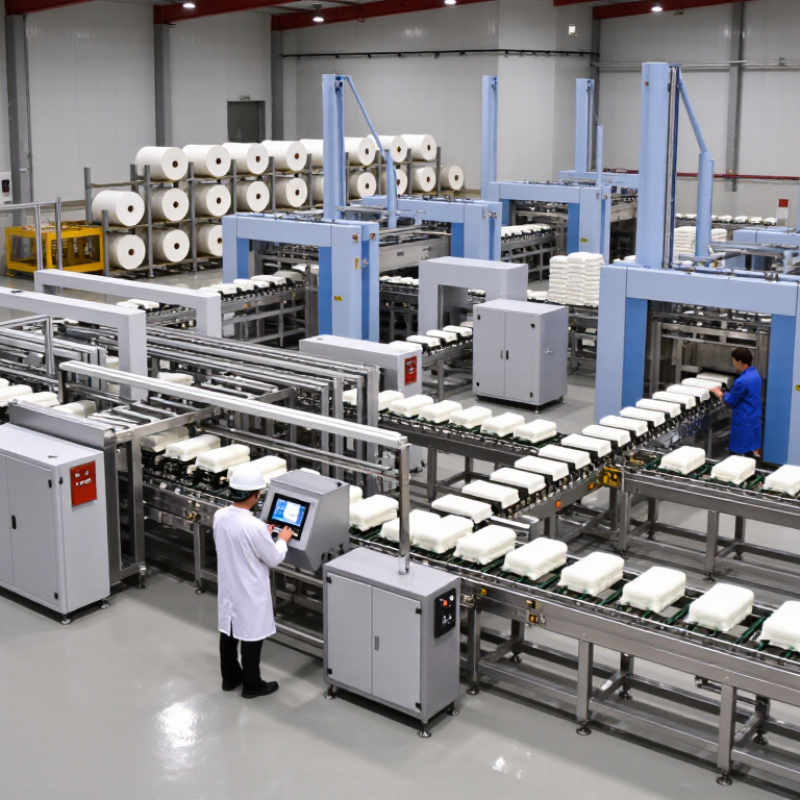
An automatic diaper machine turns rolls of nonwoven fabric, film, absorbent pulp, and elastic into finished products. Feeding units guide each material through the line, while tension controls help prevent wrinkles and misalignment. The absorbent core is formed and layered with topsheet and backsheet materials. Elastic strands and leg cuffs are added for fit and leakage control. Cutting, folding, and stacking follow. Sensors and a control system monitor speed, position, and selected quality points. Small setup errors can still cause waste, so machine output should be checked during real production, not judged from a sample alone.
For buyers comparing suppliers in China, it helps to understand the machine’s intended product range and changeover requirements. Ask how quickly operators can adjust sizes, replace rolls, and clear common stoppages. Review output rates alongside the expected reject rate; a fast line is not useful if it creates frequent defects. Also check whether spare parts, manuals, and operator training are clearly specified. Details matter. No line is perfect, and actual performance can differ with material quality, maintenance, and operator skill.
Tips: Request a production trial using materials similar to yours. Watch the core-forming and cutting stages closely, and ask how defects are detected. Get maintenance intervals and service response terms in writing.
China’s Automatic Diaper Machine Supplier Landscape
China’s automatic diaper machine supplier landscape includes equipment makers, engineering teams, and component partners serving different production scales. Buyers may find suppliers through industry exhibitions, manufacturing directories, and referrals from converting plants. Yet the market is not neatly documented. Some firms build complete lines; others focus on modules, retrofits, or service support. That distinction matters. A compact line for a regional producer may not suit a factory targeting several product sizes and high output. Ask what is made in-house, and request a clear list of purchased systems. Small details count. Look closely at web guides, tension controls, glue application, and reject handling. These can affect waste, uptime, and product consistency.
A reliable assessment should go beyond a polished video. Request a factory acceptance test using the intended materials, product dimensions, and speed range. Check changeover time, operator access, guarding, spare-parts availability, and remote troubleshooting arrangements. Ask for references from installations with comparable products, while respecting customer confidentiality. Technical documents should state measurable outputs and test conditions. A quoted speed can mislead. It may describe an ideal run, not stable production. Suppliers also vary in export experience and after-sales capacity, so confirm language support, commissioning scope, and response times in writing. No brochure tells the whole story. Some comparisons will remain imperfect; real production trials can reveal limits that sales discussions miss.
How to Evaluate Diaper Machine Suppliers in China
A supplier’s brochure may promise high output, but quoted speed means little without product quality and uptime data. Ask for a witnessed acceptance test using your target diaper sizes, absorbent-core materials, and packaging format. Record stable production speed, changeover time, reject rate, and hours of continuous operation. Check the finished products for core alignment, elastic placement, and seal consistency. Small details matter. Request test results, not just assurances.
Market demand offers context, not proof of machine performance. Fortune Business Insights estimated the global baby diaper market at USD 83.91 billion in 2023; that figure describes product sales, not machinery orders. Use it to frame capacity plans, then examine the supplier’s engineering evidence. Review electrical drawings, component specifications, spare-parts lead times, and training plans. Ask who will diagnose a fault at 2 a.m. A low purchase price can become costly when a custom sensor takes weeks to replace.
Visit the factory if possible, and watch a line run rather than relying on staged footage. Compare the promised output with the test conditions and your own material specifications. One evaluation trap is treating a successful sample run as proof of long-term reliability. It is not. Request references for comparable line configurations, and verify service response times in writing. Supplier claims still need checking.
Key Factors for Comparing Supplier Products and Services
When comparing automatic diaper machine suppliers in China, start with the product range each machine can handle. Ask for sample runs using your target diaper sizes, absorbent cores, and nonwoven materials. A stable line should maintain seal quality and registration at the speed you plan to operate, not only during a brief demonstration. Check how quickly operators can change sizes, clear a jam, and inspect key stations. Small details matter.
Request measured output data, reject rates, and energy use under stated production conditions. Then review what the figures include. A quoted speed may not reflect routine stoppages or material changes. Ask to see maintenance schedules, electrical drawings, spare-parts lists, and training plans before comparing prices. Ask for proof. A factory acceptance test with agreed sample criteria can reveal issues that a polished video may miss.
Service deserves the same scrutiny as machine design. Confirm response channels, technician availability, and typical delivery times for critical parts. Speak with operating facilities that use comparable materials and production targets, where possible. I would not treat one reference as conclusive; conditions differ, and buyers sometimes overlook that. Compare warranty coverage, commissioning support, and documented change requests in writing. The clearest proposal is not always the best, but vague exclusions make planning harder.
Top Automatic Diaper Machine Suppliers in China? - Key Factors for Comparing Supplier Products and Services
Use this comparison framework to assess suppliers consistently. Request model-specific documentation and verify all figures against the proposed machine configuration, product size range, and acceptance-test conditions.
| Comparison dimension | What to compare | Evidence to request | Why it matters |
|---|---|---|---|
| Product range | Machine type, diaper format, size range, and supported product variants | Technical specification, product samples, and a list of included and optional modules | Confirms the proposed line can make the intended products without unplanned redesign. |
| Rated speed and output | Rated speed versus sustained good-product output, specified by product size and test duration | Factory acceptance-test results showing running speed, rejects, downtime, and test conditions | Rated speed alone does not show saleable output during normal production. |
| Product quality and inspection | Inspection features, defect detection, rejection method, and quality-control records | Inspection-system description, sample defect tests, and agreed product acceptance criteria | Shows how the line detects and handles defects such as incorrect placement or incomplete products. |
| Changeover and flexibility | Changeover steps, tooling requirements, adjustment range, and time to switch sizes or designs | Documented changeover procedure and a witnessed changeover using the proposed configuration | Frequent product changes can affect labor needs, availability, and production planning. |
| Material compatibility and waste | Supported material specifications, splice handling, material utilization, and scrap measurement | Material list, trial-run records, and a defined method for measuring start-up and production waste | Material behavior and waste influence operating cost and product consistency. |
| Automation and controls | Control-system architecture, operator interface, alarm history, recipes, and remote diagnostic options | Controls description, sample alarm list, software backup procedure, and access requirements for remote support | Clear controls and diagnostics can reduce troubleshooting time and simplify operation. |
| Utilities, footprint, and installation | Machine dimensions, electrical requirements, compressed-air demand, extraction needs, and layout clearances | Approved layout drawing, utility schedule, foundation details, and installation scope | Early checks help prevent site-preparation delays and unexpected facility costs. |
| Safety and compliance | Machine guarding, interlocks, emergency stops, electrical documentation, and destination-market requirements | Risk assessment, electrical schematics, safety-device list, and applicable compliance documents | Requirements depend on the installation location and should be confirmed before purchase. |
| Commissioning and training | Installation supervision, commissioning scope, operator and maintenance training, and acceptance criteria | Written project schedule, training plan, acceptance-test protocol, and responsibility matrix | Defined responsibilities make handover and production ramp-up more predictable. |
| Spare parts and after-sales support | Recommended spare-parts package, lead times, warranty terms, service channels, and support hours | Parts list with part numbers, warranty conditions, service response process, and escalation contacts | Availability of parts and technical assistance affects recovery from equipment issues. |
| Total cost and contract clarity | Equipment price, options, installation, training, packaging, shipping, exclusions, and payment milestones | Itemized quotation, delivery terms, scope boundaries, warranty, and agreed performance clauses | A consistent scope makes quotations easier to compare and reduces ambiguity. |
Practical comparison tip: use the same product specification, material set, test duration, and acceptance criteria for every quotation. Treat supplier-stated performance as unverified until it is documented and tested against the agreed conditions.
Profiles of Notable Automatic Diaper Machine Suppliers
Chinese automatic diaper-machine suppliers generally fit three profiles: high-speed line builders, flexible mid-sized integrators, and component-focused engineering firms. The first group typically serves large plants needing continuous production, automatic splicing, and inspection systems. The second may suit buyers seeking several product sizes or staged capacity upgrades. Component-focused firms often support retrofits, control systems, or individual production modules. These are useful distinctions, though supplier categories can overlap.
Grand View Research estimated the global baby diaper market at about US$83.4 billion in 2023, with projected annual growth of 6.6% through 2030. That demand context helps explain investment in faster, more adaptable lines; it does not prove that any supplier delivers better results. Buyers should compare verified output speed, changeover time, rejected-product rates, and local service response. Ask to see a running line, not just a polished video. A small detail matters: can an operator clear a jam without lengthy downtime? Supplier brochures rarely answer that well. Maintenance access, spare-part availability, and training quality can matter as much as headline speed, and these points deserve careful checking.